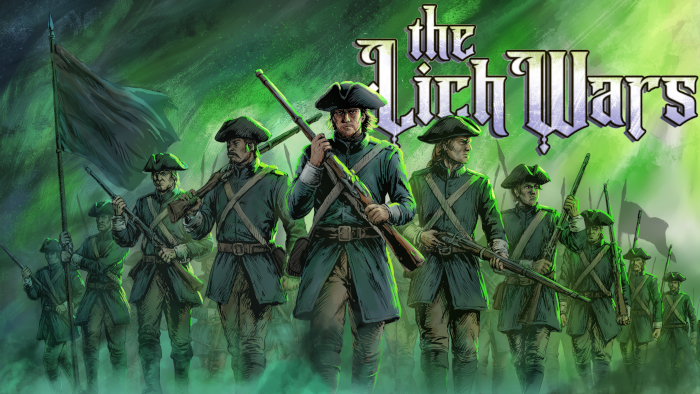
I was interviewed on our recently-announced game The Lich Wars, which is a follow-up (actually a prequel) to last year’s The Necromancer’s Tale. Here’s the unedited Q&A:

The Necromancer’s Tale was a traditional CRPG, while The Lich Wars takes a much more narrative-driven approach. What convinced you to change direction, and were there any mechanics from the previous game that you found particularly difficult to leave behind?
——–
Although TNT was a traditional open-world CRPG, it was heavily text/narrative-driven too: more like Disco Elysium than Baldur’s Gate. The most praised features were the writing and story, so we are leaning into that directly with The Lich Wars. In this respect, The Lich Wars is less of a change of direction than it might seem.
Another factor in our decision is the amount of work involved in making an open-world game – it took 5.5 years to make TNT, and we were hesitant to commit to such a big project immediately after it, or to keep fans waiting so long for the follow-up. The main thing we miss from the previous game is exactly that: the open world. In an open world, a lot of the pacing is controlled by the player as they move about and decide who to talk to next and what lines of inquiry to follow. In contrast, The Lich Wars risks feeling stifled and lower-agency; we are implementing specific features to mitigate that – for example, during less intense times in the story, the player is offered a menu of small ‘side quests’ to engage with or ignore as they wish.
The Lich Wars is also a big, sprawling story which covers not only 30 years but also brings the player on tours across much of Europe. The story we wanted to tell was best served by an approach that isn’t constrained by a traditional open-world format.
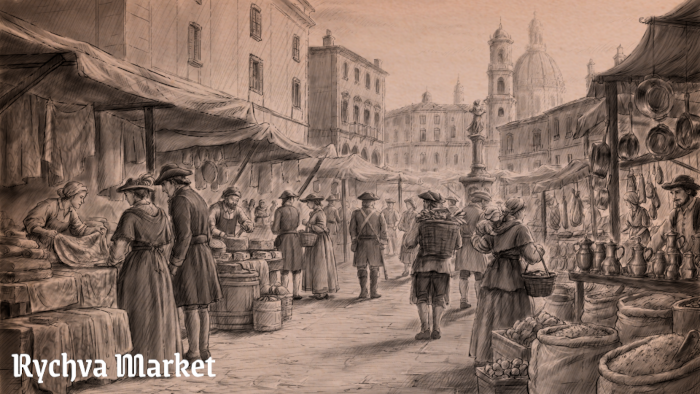
The story follows a soldier across nearly 30 years, with three different career paths and relationships that evolve over time. How challenging has it been to make decisions from the early years feel meaningful decades later?
——–
The core story arc doesn’t change, it’s the details within it which do. I guess the answer to keeping early decisions meaningful is to always be on the look out for opportunities to interconnect events. Also a lot of our relationship modelling is carried by a Relationship number (which the player has for each significant NPC and for the military hierarchy itself.) The key then is to carefully balance the changes to these numbers, and then to identify psychologically meaningful ways to branch the story in small ways based on them.
The fact that some pretty momentous things happen early on in the story also means that early player decisions will naturally reverberate throughout the following years.
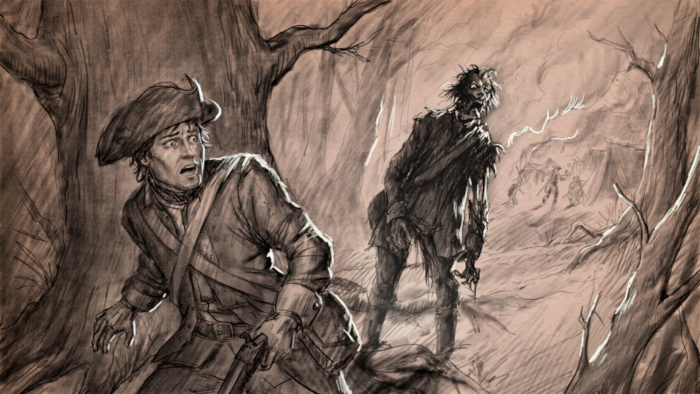
Combat combines written descriptions with randomized critical-hit tables, covering everything from personal duels to enormous battles. How does this system work, and how do you keep combat exciting when so much of the action unfolds through text?
——–
Combat choices are offered in the regular narrative text, as options for the player to pick from. A combat choice combines one or more skills/stats (e.g. Strength, Agility, or Readiness or Morale) into a percentage chance of success, and then between two and six graded outcomes might happen based on how strongly the dice-roll succeeds or fails. The beauty of this system is that every single combat sequence takes the form of custom-wrritten narrative, and thus every decision in combat is unique and never repetitive and is not constrained by 3D models or animations. More traditional combat in games has a tendency to get predictable, whereas we can offer unexpected outcomes and (we hope) the player will engage with each combat as a unique experience.
It’s certainly an old-school approach: much more like a tabletop RPG than an action RPG.
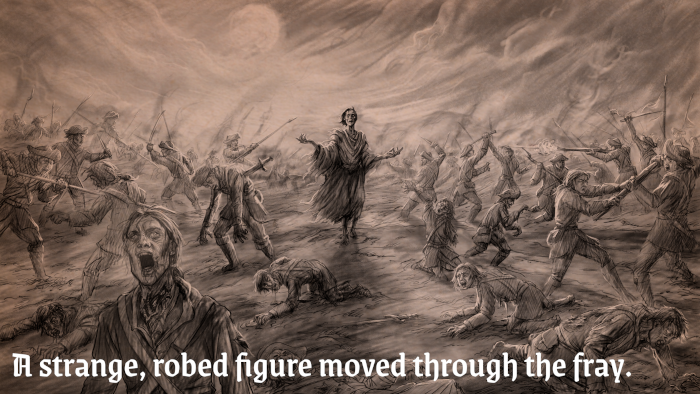
One fascinating detail is that Aleks and his three lifelong friends remember the same events differently. Why did you choose to explore unreliable memories, and can players influence how these characters interpret their shared past?
——–
We are approaching The Lich Wars as a proper literary work of gothic fiction, rather than just a game with a gothic atmosphere. There are a number of themes which classic gothic literature explores, including the concept of the unreliable narrator (Edgar Allan Poe and H.P. Lovecraft would be good examples of this). This is one of the themes in their work which I find most powerful: it puts you in the shoes of someone under so much psychological stress that they can’t even believe their own memories.
The reason we chose to push strongly in a literary direction is that we saw how strongly our writing in The Necromancer’s Tale resonated with players, and it was the story and narrative that won most awards. We saw that there is a genuine market for well written game narratives which explore these sorts of ideas.
Although the overall story arcs have been mapped out for the game, we are still only in the first war in terms of completed writing. It is this war which produced the horrific events which characters remember differently. We haven’t yet written the later scenes where events are discussed. The intention is that the player will indeed be able to debate and discuss what “really” happened.
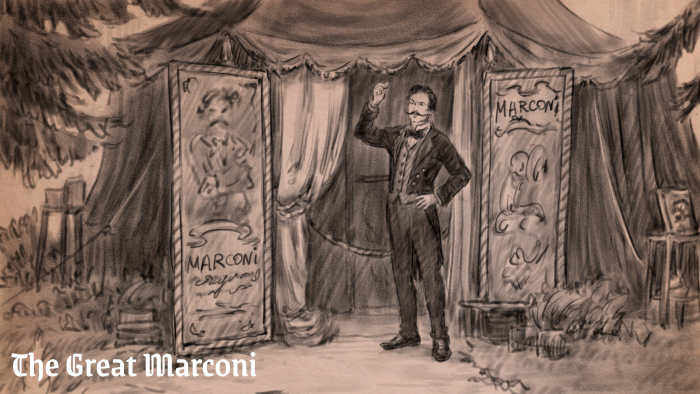
The game presents its story through a 3D book, illustrated characters, and hand-painted tabletop miniatures. How did you arrive at this unusual visual approach, and were there any interesting ideas or experiments that didn’t survive development?
——–
The core idea – of the illustrated 3D book – carried through from The Necromancer’s Tale. In that game, there is a brief (~30 minute) prologue presented in that format. We have had a lot of players say how much they enjoyed the format and many saying they’d love a full game done that way.
The table is a separate idea, of course. It’s a low-key replacement for an open world: an opportunity to show key scenes in a more impressive way than would be possible in a pencil sketch. We’re attempting to deliver a visual novel with top-end multimedia quality as well as top-end writing.
The book and table also suggest the idea that the protagonist is somehow in a later time, reflecting on events of the past – the book and table are representations of events, rather than actually being the events. This ties in with the idea of unreliable narratives and self-justifying constructions which justify the things we do and ease the things that we can’t quite accept from our past.
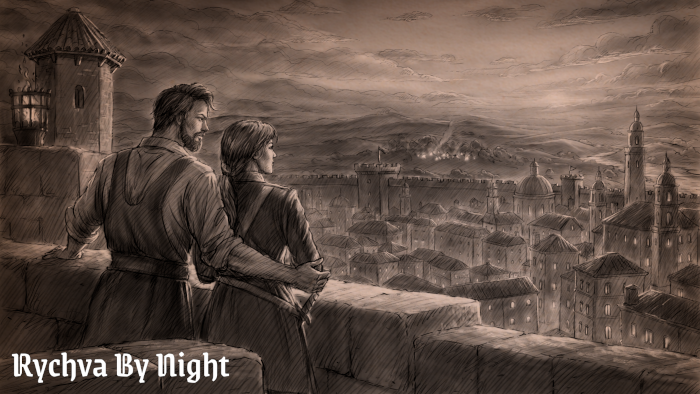
With an estimated 300,000 words of branching narrative and lessons learned from The Necromancer’s Tale, what’s one thing you’ve changed about your development process that you’d recommend to other indie developers tackling ambitious story-driven games?
——–
In fact, we are following the exact same process! It worked really well the last time, although I do acknowledge it was a process that we evolved into through necessity rather than by design.
Essentially, the way it works is that we have a well-developed high-level story design – with all the plots and character arcs specified – and with individual scenarios scoped loosely as single paragraphs. The entire document is 55+ pages. We work with a team of writers (currently 5, including me) who ‘claim’ individual scenarios to write whenever they are ready – this allows them to specialise and pick the scenes that appeal to them most, and it also means nobody is put under too much pressure to deliver to a deadline. We meet every two weeks and discuss what we’re working on and what comes next, so there’s a lot of cross-pollination going on.
The writers deliver their work to me (the editor) as regular Google Docs, and I enter them into our branching narrative tool (Articy: Draft). Although this is somewhat onerous on me, it forces me to read very carefully as each piece is entered, so it leads naturally to a well-edited, high-coherence narrative. Articy is an excellent node-based visual tool which means I can easily spot errors and additional opportunities to add bits to the scenes as I put them into the game.
The interview was also published with editorial opinion here (DevPlay Media).
]]>
- We received the ‘best overall storytelling’ (narrative) award
- We received the ‘best overall technical achievement’ award
- We received the ‘runner-up art direction’ award
There were a lot of amazing games released in Ireland during 2025, and we’re particularly honoured to have received the ‘best storytelling’ award, given the intense competition from other outstanding narrative titles.

Hexgrids
Hexes are often considered better than squares for turn-based combat games, since hexes are the same distance from each of their neighbours. My code for building these starts from a seed position, which is manually set at a walkable location, and then it searches in all 6 directions using raycasts to see which ways can be walked from this location (i.e. which directions are clear of obstacles). This adds more hexes which are then also searched – we “flood” outwards until all reachable hexes within our predefined region have been added, along with their connectivity to their neighbours.
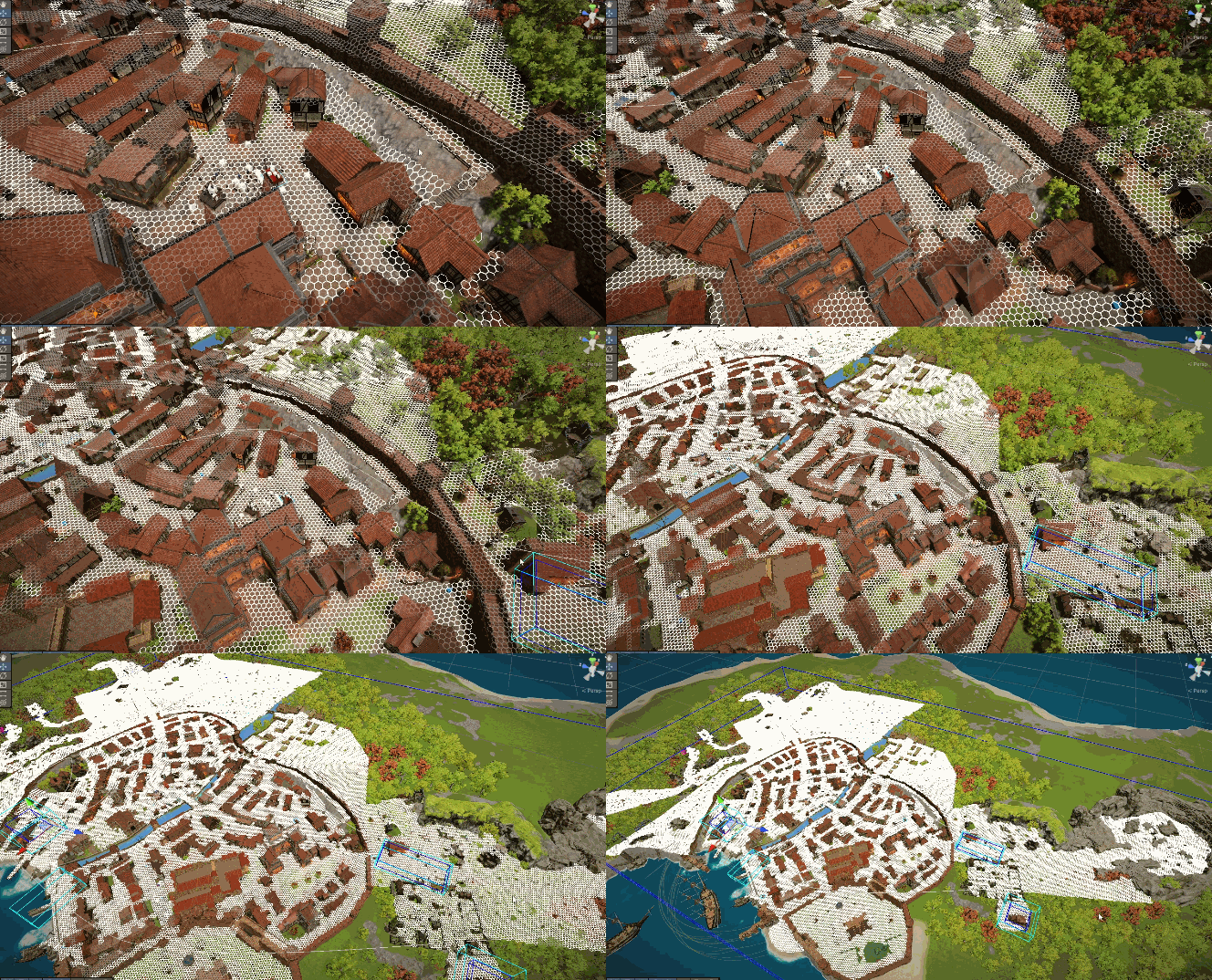
This produces a graph of connected nodes, which is perfect for the A* algorithm. We also need to be able to quickly gather hexes within an arbitrary region of space (without the inefficiency of having to search outwards from the seed location to find them), so hexes are also inserted into buckets which are configured as a sparse 3D array based on 1m x 1m x 1m size. The overworld has 70,000 connected hexes, and each interior/underground location has its own hexgrid. All A* grid loading and pathfinding is performed by multiple threads.
Less Need for Invisible Walls
The player has several options for how to control movement, including mouse-clicking (which uses A* pathfinding to figure out a route around obstacles) and direct WASD or joystick-based control (which does not).
Direct movement (WASD/joystick, where movement is constrained only by collisions) has a problem whereby players might wander away from where you want them to go, and off into the empty wilderness. By cross-referencing the player’s position with the hexgrid, I constrain the player to stay close to the nearest hex – this means there’s less need for invisible walls to stop them wandering off into the wilderness where there is no game content, or from walking inside solid objects when Unity’s rather suspect physics mesh-collisions fail.
Nice things you can do with the G (‘cost’) component of A*
A* is a pretty elegant algorithm for efficiently finding the shortest path between two locations. At its core is a calculation F = G + H, which estimates the distance that a possible solution might take through a given node. The G part of this is interesting: it’s the cost of getting from a node to a neighbour. Often this is simply chosen as the Euclydean distance between the nodes, but it doesn’t have to be.
We can make the G cost higher, for example, when crossing difficult terrain. This discourages the algorithm from picking a route without actually forbidding it. In TNT, I quickly found that the townsfolk loved taking a shortcut through a graveyard, which was often a slightly shorter way of crossing the river between the north and south of the city. This didn’t feel right: the cemetery path is visibly narrow and not well-worn, and crosses a narrow bridge, while the ‘standard’ route is a wider stone bridge leading through the marketplace.
So I added penalty areas – regions of space for which the G cost between hexes is artificially inflated. The cemetery is an obvious place where this works well, but this approach let me fix other areas too, for example narrow gaps between pairs of houses. I also add a per-terrain-texture penalty, so that NPCs tend to walk on cobblestones in preference to grass or sand. This stopped them from taking shortcuts all the time, and kept them to routes that they visibly ‘should’ be using.
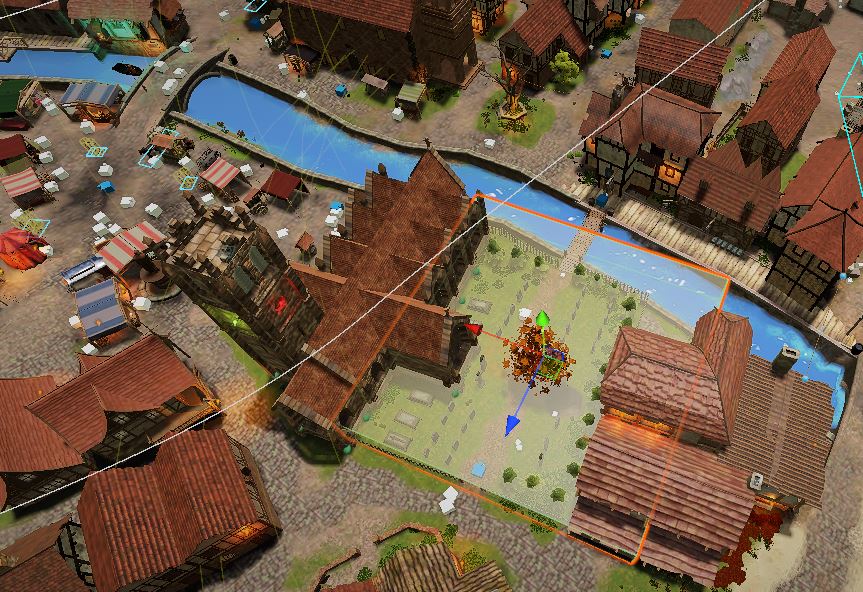
By the way, if you’re wondering about all those white and blue boxes, they are named location markers – NPCs often move between specific locations so this was a good way to lay them out. These markers are also used in the cutscene system, allowing ‘stage directions’ to control character movements synchronised to a conversation or scene. [I wrote a bit about the cutscene system here.]
Believable Pedestrian Movement in Crowded Environments
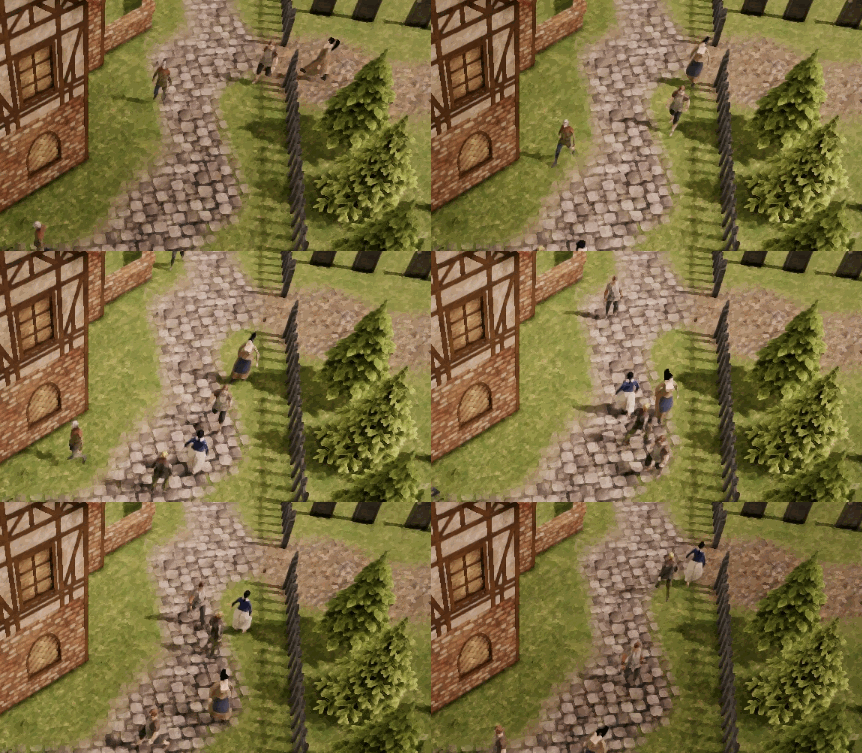
Once I had a town full of wandering villagers, I needed to make them aware of each other so that they weren’t colliding all the time. Over the several years I was working on this, l had written various last-minute avoidance approaches (basically, over-riding their current A* path trajectory when they were about to collide) so that characters didn’t walk right through each other. It worked okay, but not great: avoidance tended to look very unaware and last-minute.
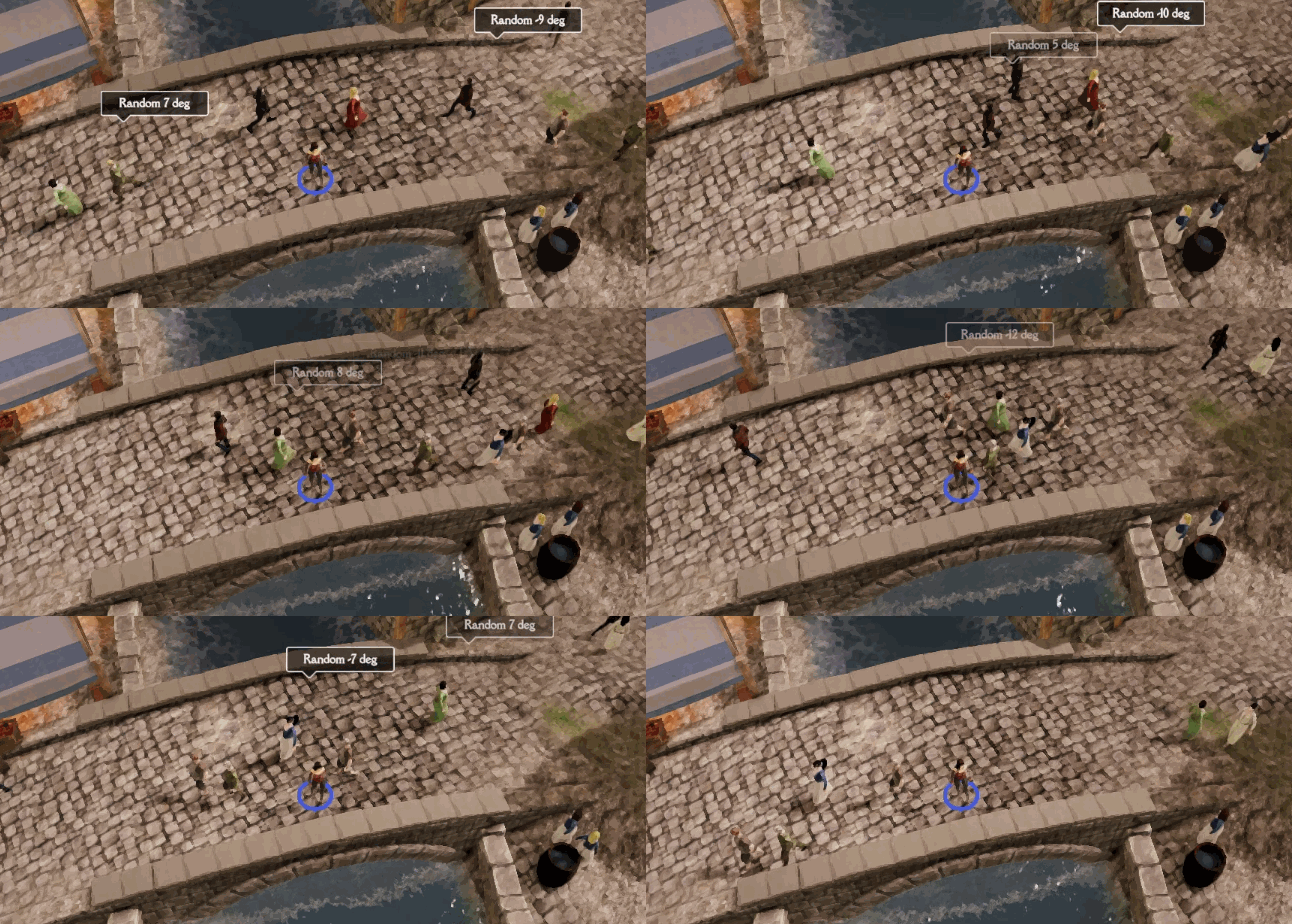
Here in debug mode they’re telling me about random path modifications they make when there’s other pedestrians nearby:
But then I discovered the RVO (Reciprocal Velocity Obstacles) algorithm: see discussion [here] and [here].
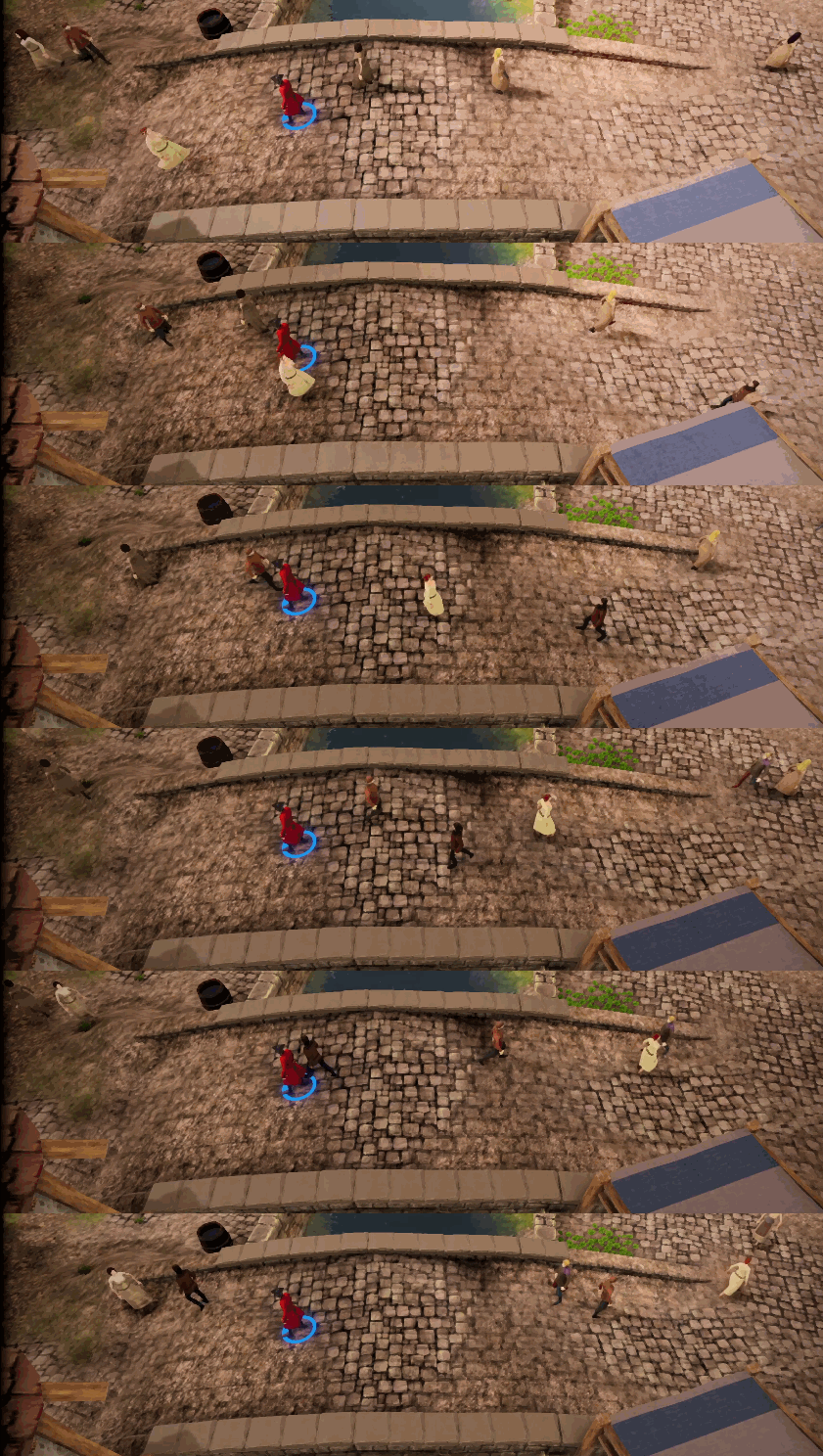
This provides a more elegant simulation of all moving characters, each of whom registers their intended trajectory. The paths taken by characters are then modified to avoid collisions several seconds into the future.
One Size Does Not Fit All
I had put a lot of effort (3+ years) into massaging my code and its parameters so that it worked well in all circumstances while overcoming recurring problems such as NPCs falling into holes or getting stuck on stairs (are stairs a hole when you’re going down? Are they a cliff when you’re going up?) Given the different sizes and speeds of characters, and the different steepnesses of terrain and stairs, this was a difficult task and perhaps ill-posed, i.e. lacking any single correct answer given the constraints.
My breakthrough came in a very simple form: I started to demarcate areas where the rules behaved differently. When walking on stairs, a character could turn off its hole-avoidance and steep ground avoidance. When going through busy narrow archways, characters could temporarily make their RVO objects thinner, so they don’t get in a muddle all trying to avoid each other. These are simply done as Triggers in Unity. When a character is inside a certain type of trigger, it runs alternative code for specific sections of its movement function.
Other Things I Have Written about Pathfinding
I’ve done some other interesting things with the A* algorithm over the years. [Here’s one from 15 years ago] with [an academic paper I wrote]. I captured data from players in order to make computer-controlled vehicles take ‘sensible’ routes.
]]>I had some things in my favour, including my BA in English literature (majoring in Gothic fiction) and 30 years experience as an academic: proof-reading and editing are things I’m very experienced at.
Still, I was all at sea in late 2019 when we received EU (Creative Europe MEDIA) funding to prototype the game. I was faced with a mammoth task and had little idea how to start it.

Building the Narrative Structure
Luckily, I’m friends with a very experienced game-narrative director (and awesome writer) Dave McCabe- and he was interested in writing for a traditional RPG (his prior work mostly being the point-and-click Darkside Detective series). Dave worked with me on the game for about 15 months, during which time we put a lot of shape on the story. Under his direction we put together the pre-game timeline, including history, geography and backstory, as well as the biographies of key characters. Dave wrote the 10,000-word prologue for the game, and a lot of the writing for the next three chapters. This provided a good foundation (including stylistically and atmospherically) for the additional writers that we found we needed.
Since I only get to work part-time on my games, I always develop them without hard deadlines, and that played into the requirements of The Necromancer’s Tale. A story turns out best when it is mulled over, iterated, refined, and edited. It needs time to ferment in your imagination.
The Team Expands
Due to work and family commitments, Dave had to step back from the project during 2020, so I put out an advert for game writers to help. I was lucky to recruit an awesome team of writers (two at first: Damir and Zach, with three more following later: Sarah, Michael, and Brad). As it turned out, the strong direction I could provide due to the early work from Dave and I resulted in strong results from the team. This is something I’ve seen too when commissioning artists: the stronger your direction, the better their work will be.

Branching game narratives and interactive-world to text-narrative integration are pretty complex, even when working with a powerful authoring tool (we used Articy:Draft). I found very quickly that there was a lot of back-and-forth needed between the narrative and my other code: e.g. synchronising in-game actions with the narrative- this required controlling in-game things with reference to the unique IDs of the text nodes exported from Articy. The process was pretty unwieldy while Dave had ownership of the Articy writing and I had ownership of the game code and 3D environments.

The Writing Process
When I recruited the other writers, I took sole ownership of both the Articy project and the Unity project. This meant that the tight integration that was necessary between the narrative, the C# code, and the 3D game world became manageable. Writing was provided to me in simple Google documents, and I copied-and-pasted it into Articy. Although this was a bit onerous, it also forced me to carefully proof-read and edit everything, keep an eye out for any contradictions or inaccuracies (or logic errors), and add extra material where I saw an opportunity.
I put together a pool of writing tasks – made up of scenarios and quests from throughout the game. The writers (including me) claimed these tasks according to their own preference and available time. We met bi-weekly to discuss the ongoing work and to brainstorm current and future writing. This worked really well, not least because it respected the availability of each contributor. (We were all part-time on the project).
Keeping the Writing Coherent
I was concerned about the potential risk, that having 8 different contributing writers could lead to inconsistent characterisation and confused narrative arcs. However, neither of these things happened, and indeed reviews of the game widely praise its coherence and the compelling story arcs – most notably, the mental slide of the player character into deceit, murder, and black magic, as their humanity is chipped away piece by piece. Our foundational work and ongoing process served us well.
In our game design document, everything is laid out chapter by chapter, and one of the things I’m very pleased I did was to indicate at the top of each chapter the internal state-of-mind of the player character (PC). This provided direction for the writers, which ensured a coherent arc. For example, in the early game – as they are just starting to explore quite benign magic for mostly-selfless reasons – the PC’s mental state is framed by the concerns of a young adult whose father has died in suspicious circumstances, but who is generally law-abiding. As the story progresses, the PC requires darker magic to progress their aims, and begins to fall under the influence of entities from ‘beyond the veil’. They begin to see friends and family in a different way – and the player is forced to question how manipulative they would be to achieve their goals. By the mid-game, the PC is quite unhinged, sometimes not knowing what is real and what is a whispered manifestation from the realm of the dead. Mortals are becoming mere tools, and the PC ruminates on how they are left cold by the needs and desires of mortals.

What Did I Learn?
My early work involved putting together a high-level outline of the total plot. All subsequent work was about iterating this and adding more and more detail. Even before any dialogue was written or any quests specified, I had passed three or four times through the story, identifying puzzles, opportunities, and motivations for the player. This meant that, when detailed material came to be written, it was done with a knowledge of the total scope of the plot. It meant we rarely struggled to identify what aspects of each piece were most important to progression, and it meant we didn’t encounter inconsistencies and contradictions that needed fixing later. I learned that iterating/cycling through the story over and over is a good way to develop a project like this.
The Necromancer’s Tale has been widely praised for its narrative and writing, and is shortlisted as a finalist in the prestigious TIGA awards 2025, in the narrative & storytelling category.
Post-script addition, March 2026: The game has also received three awards at the Irish Games Awards 2026, including best overall game in the narrative & storytelling category, for games released in 2025.
]]>I was lead-developer over the 5.5 year development process, and the team involved 8 writers (including me) – with the narrative finally coming in at 400,000 words. We released the game on July 17th.
Reviewing Strongly
Although we had a hunch (from the demo and beta testing) that players liked the writing, we really had no idea how the narrative would resonate with the wider player-base once we hit full release. Therefore it was (and is) amazing to see almost-universal acclaim for the narrative, its progression/arcs, and the writing generally. It’s so cool to see so many players really *get* what we were trying to achieve with aspects such as the slow slide into depravity, and the lengths that one might go to in order to gain knowledge, power and revenge. As an English-lit graduate who majored in gothic literature (many years ago!), this really means a lot to me.
Our game is currently at 93% positive on Steam (440 reviews), with nearly all reviews citing narrative and writing as its key strengths. Lots of players have commented in their reviews, or in our Discord server that they find the story utterly engaging.
One reviewer referred to the game as a Gothic Masterpiece: [see review here]

We have also been shortlisted as a finalist in the prestigious TIGA 2025 game awards, in the Narrative & Storytelling category, and included in various narrative-focused game showcases such as AdventureX.
Hard Work Post-Release!
I have released quite a few games before, and as lead developer I was prepared for a few weeks of hard work patching niggles and bugs, and adding quality-of-life features. It’s important to be super-responsive to players in the period following a game’s release, because you want their experience to be as good as possible, and you *really* want to avoid frustrating them with bugs and soft-locks.
What I hadn’t anticipated was the amount of work required for hint-support. My previous games had all been smaller or systems-based (rather than narrative, puzzle-oriented), so the deluge of questions and comments about the story/puzzle content was a bit overwhelming. Since I was the central developer, integrating the work from the other 7 writers, I was the only person with complete and in-depth knowledge about how everything fits together.
So I had to single-handedly run the hint-support (mostly on Discord and Steam forums) as well as single-handedly do the debugging, patching, and feature additions. It was pretty hard going for a few weeks. At one point, about three days after release, and with very little sleep, I was up at 5am helping a player milk a cow… that pretty much sums up the work of an indie-dev. 
One of the first things I added was a mechanism for players to easily upload their save-game files along with bug reports (from right inside the game) and this helped a lot when diagnosing the exact combination of narrative states causing issues.

Key additions post-release have included:
- Some improved sequencing and narrative in a couple of places where players found the story jarring or the MC’s motivations unclear.
- Some new narrative content in places where there was a clear opportunity to extend/strengthen things- especially where these things leaned into the core themes and plot.
- Some extended romance options.
- A wilderness map with fast travel.
- Improved minion control (this work is still ongoing – the main criticisms of the game have been around minion control and combat, so I’m still working hard to improve these aspects while staying true to the game’s core design).
- Steam Deck verification. Yay! All my work back in January on input abstraction, D-Pad menu control, and joystick control of the mouse-pointer has paid off.

GamesCom
Kirsty and I brought The Necromancer’s Tale to GamesCom (Cologne) in late August, and spent a full week running our booth there between us (11 hours per day). This would have been grueling enough already, but following the few weeks I had just had, it was doubly so.
GamesCom was a great experience- we met lots of other devs (which is always lovely) and lots of enthusiastic players (some of whom had already played our game!). We also made some good industry contacts, which is what these events are also about. From a personal point of view, though, it was stressful being away from my development PC for over a week– it meant I couldn’t accurately diagnose certain bugs and couldn’t patch the game if anything game-breaking came to light. Luckily, everything was okay– but if our launch date had been any closer, I think it could have been damaging to the game’s reception to have been away from the office for so long.
Our next goal for the game is to get it ported and released on PS, XBox, and (if they’ll have us) Switch2.
]]>The game has around 400,000 words of narrative (from 8 writers) and over 180 unique NPCs to meet- each with their own narrative content, hand-drawn portraits and partial voice acting (from 25 voice actors). A complete playthrough ranges from 25-50 hours, depending on how much side content and hidden content you explore, and whether you play with normal (turn based) combat or choose to have combats automatically resolved.
We’re also delighted to have The Necromancer’s Tale picked for the London Games Festival 2025 Official Selection and we’ll be demoing the game there on April 3rd/4th.
Here’s our latest trailer:
I have also put a lot of effort into supporting game controllers and Steam Deck. In fact, the first ever full playthough was done on an X-Box controller.


This occurs mid-game, at which point the player has solved the murder-mystery focus of the first half of the game, while gaining their fledgling necromantic powers. Their reality is confused now, as they struggle to come to terms with the duality of the mortal realm and the realm of the dead, while building their power in order to exact revenge on the murderer.

In the Royal Ball, the player navigates the complex social circles of 1730s nobility, while having ghosts and demons whispering lies in their ears. The player is trying to gain evidence to prove their father's killer, and narrative choices offer the risk of exposing the player's rising insanity, and having them ejected from the ball or even arrested. The process is framed as a mini-game where Concern, Suspicion, and Stress rise towards crisis levels…

Lord Richard Carnell is an weaselly sycophant, closest adviser to the Baron, and deeply suspicious of the player. He could have critical information, if he can be manipulated the right way.

Lady Agnes Carnell, the cold, enigmatic wife of Richard: stuck in a loveless marriage and harbouring one or two valuable secrets, and a flirtatious nature…
Marija and Stanislav are a couple from the northern provinces of Rulsthen. New money, newly wedded, and irritatingly in love.

The great English writer Alexander Pope is a guest at the Ball, researching his great Essay on Man, as well as a more secretive work. A useful contact and ally, perhaps, if you can stand his pompous language.

Ali Mustafa Pasha is a vizier from the Ottoman Empire, accompanied by his magical servant, a Djinn, who cannot be seen by ordinary mortals but who can see the player and some of their crimes.

The player’s uncle Jervase Van Elstrik, the Baron himself, is a man under pressure and grieving for his brother (your father).

Mirabel Van Elstrik is the player’s aunt, wife of the Baron. A sad woman haunted by her own ghosts.
The Necromancer’s Tale is currently available as a ~3-hour free demo on Steam and will be completed in the next few months.

That’s right. It’s a gif of a cat. It’s about to hiss at you and run off.
We have also learned that players hope that the final game will offer a range of summonable creatures and various other necromantic battle-magic spells (in addition to the ritual magic which has always formed the core of the game). The one area that players felt a bit bland was combat.


Some powerful creatures you can enslave, and then summon to help you in battle.
The latest demo shows off our improved combat system, adding Mana, Battle Magic Spells, and Activity points carry-over. We have also made a more friendly in-game tips system during combat and generally improved the combat UX.
Mana: this is the game’s 10th skill, adding arcane ability to the physical, social, and mental emphasis of the existing skills. Mana will be built up in various ways as you progress through the game, either directly or through the wielding of magical artefacts. Mana has become a core skill which is now needed in order to activate undead minions in battle, as well as to cast other spells.
Battle-magic spells: we have 10 battle spells planned in total, but for now the demo offers 3. Each spell costs Mana, Action Points, and (sometimes) drains your Energy.
- “Activate Minion” is required in order to move a minion during the current combat round. Adding this requirement makes undead minions fundamentally different to your human allies in combat, adding a tactical dimension to their positioning and activation.
- “Death Focus” allows you to commune with the Realm of the Dead and gain a temporary Mana boost. This is a useful spell when you’re in a tight spot, perhaps during a combat round in which the randomised winds of magic are blowing only weakly.
- “Chilling Mist” is the first of two planned area-effect spells. This one invokes a magical mist which drains the action points of all mortal creatures in the affected area. It adds more tactical nuance to your control of the battle-field’s space.

From next Thursday (Dec 7th) the game is going into its second round of playtesting on the excellent [G.Round platform]. If you’re interested in being involved, for The Necromancer’s Tale or other games, please check them out!
]]>
Trust
Trust represents the attitude of the NPC townsfolk to the player. Through the use of ‘Trust Groups’ we simulate the behind-the-scenes gossip through which one NPC’s changing attitudes to the player propagates around their social network. For example, if the player acts cruelly to an NPC, then the Trust value will reduce for each of the Trust Groups that that NPC belongs to.
The Trust Groups are:
1 Workers
2 Educated
3 Military
4 Gentry
5 Orphans
6 Outsiders
The player’s uncle Jervase (militaristic baron of the city), for example, belongs to the Military and Gentry trust groups.

The overall trust of the city to the player is calculated from the average of each of the first four trust groups (since no-one really listens to orphans or outsiders). If this overall city trust value drops too low, the player will be tried in court, punished, and perhaps hanged. In the meantime, conversation options are affected by Trust values.
Transgressions
As well as conversation, the game also involves physical activity, of course. The player interacts with objects in the world, moves around, fights (on occasion), and sometimes drags dead bodies back to their home laboratory. Whenever the player is doing something illegal, line-of-sight arcs are displayed for all nearby NPCs. If the player falls within the arc of an NPC, then Trust is affected by the witnessing of the transgression (for the appropriate Trust Groups).

Tension
The second concept in our social system is Tension. This is a number which represents the overall atmosphere of fear in the city. Actions taken by the player which they were not actually witnessed doing will raise Tension but not directly affect Trust. So the player should be careful not to leave dead bodies lying around or bump off too many NPCs – even though they may get away with it at the time.
As Tension rises, the city becomes more heavily patrolled by guards, which in turn makes Transgressions harder to get away with. A high tension value also means that people are more suspicious, harder to deal with in conversation, and more likely to jump to conclusions if the player ends up in court.
The Necromancer’s Tale is in development and you can wishlist it on Steam now, to keep up to date on development progress!
]]>
[Read our 2022 book chapter on the Newby Chinese approach]
Our approach really took shape in 2018 when we started developing multiplayer minigames – whereby the teacher projects their screen at the front of a classroom, and the students — perhaps 30 of them or more! — log in using browsers on their smartphones/tablets in order to learn, compete and have fun. Each student’s device takes on a variety of input roles as appropriate — at times joystick, at times freehand drawing pad, at times a private device displaying information to that student alone as part of a wider multiplayer game.

Richard has delivered the Newby Chinese system in Irish secondary schools (typically as a Transition Year experience) since 2018, with around 100% growth year on year. We are reaching the stage where the platform is ready to be used by other Chinese teachers – either representing Newby Chinese, or within a school hiring our platform for their own direct use.

Richard’s work has involved development of a unique pedagogical approach which breaks down the components which make up the thousands of arcane-looking pictograms in the language. Together we have built a range of multiplayer games and interactive media within the platform to help students collaboratively learn reading, writing, and speaking the language.

We have published several academic papers on Newby Chinese since 2018 and won the ‘best overall presentation’ award at the Irish Game Based Learning Conference 2019. There’s a lot more detail on Newby Chinese in a book chapter which we have recently published in Handbook of Research on Promoting Economic and Social Development Through Serious Games (2022). You can read the full chapter here if you’d like to learn more.
Here’s a bunch of 15 year old boys jumping around excitedly, shouting and hugging each other – that’s right, hugging each other! – while learning new Chinese words in our Pacman/musical-chairs mashup game Maze Hunters.
]]>