
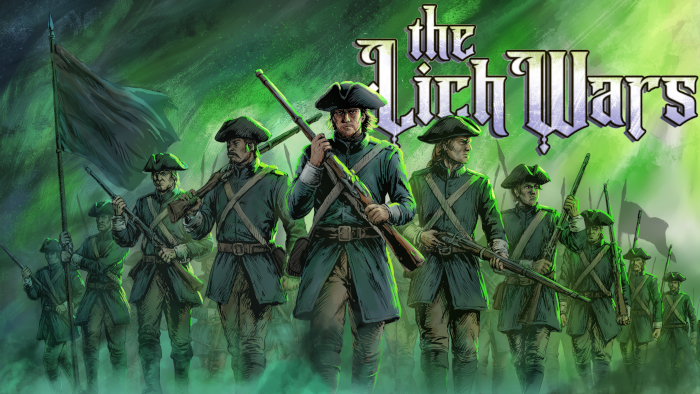
I was interviewed on our recently-announced game The Lich Wars, which is a follow-up (actually a prequel) to last year’s The Necromancer’s Tale. Here’s the unedited Q&A:

The Necromancer’s Tale was a traditional CRPG, while The Lich Wars takes a much more narrative-driven approach. What convinced you to change direction, and were there any mechanics from the previous game that you found particularly difficult to leave behind?
——–
Although TNT was a traditional open-world CRPG, it was heavily text/narrative-driven too: more like Disco Elysium than Baldur’s Gate. The most praised features were the writing and story, so we are leaning into that directly with The Lich Wars. In this respect, The Lich Wars is less of a change of direction than it might seem.
Another factor in our decision is the amount of work involved in making an open-world game – it took 5.5 years to make TNT, and we were hesitant to commit to such a big project immediately after it, or to keep fans waiting so long for the follow-up. The main thing we miss from the previous game is exactly that: the open world. In an open world, a lot of the pacing is controlled by the player as they move about and decide who to talk to next and what lines of inquiry to follow. In contrast, The Lich Wars risks feeling stifled and lower-agency; we are implementing specific features to mitigate that – for example, during less intense times in the story, the player is offered a menu of small ‘side quests’ to engage with or ignore as they wish.
The Lich Wars is also a big, sprawling story which covers not only 30 years but also brings the player on tours across much of Europe. The story we wanted to tell was best served by an approach that isn’t constrained by a traditional open-world format.
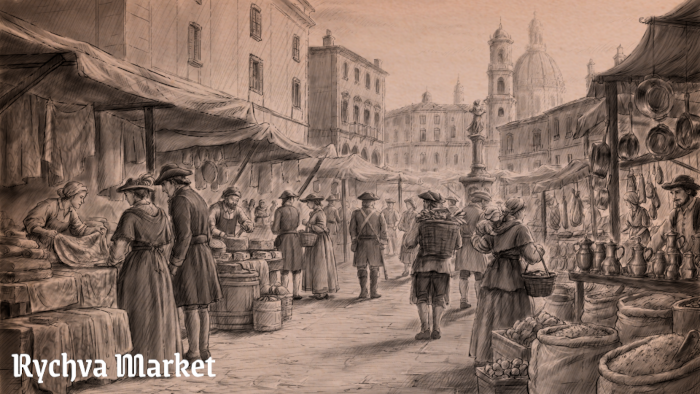
The story follows a soldier across nearly 30 years, with three different career paths and relationships that evolve over time. How challenging has it been to make decisions from the early years feel meaningful decades later?
——–
The core story arc doesn’t change, it’s the details within it which do. I guess the answer to keeping early decisions meaningful is to always be on the look out for opportunities to interconnect events. Also a lot of our relationship modelling is carried by a Relationship number (which the player has for each significant NPC and for the military hierarchy itself.) The key then is to carefully balance the changes to these numbers, and then to identify psychologically meaningful ways to branch the story in small ways based on them.
The fact that some pretty momentous things happen early on in the story also means that early player decisions will naturally reverberate throughout the following years.
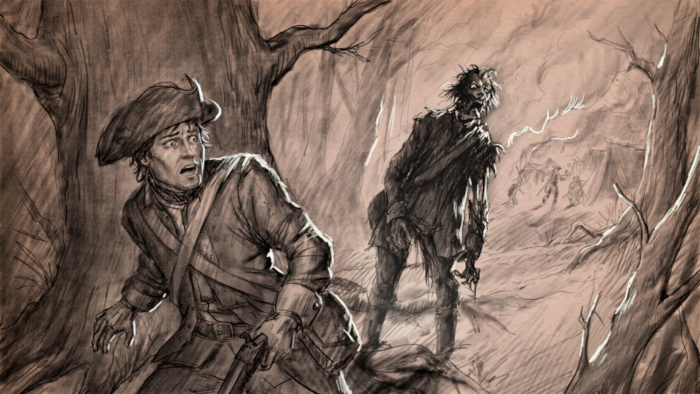
Combat combines written descriptions with randomized critical-hit tables, covering everything from personal duels to enormous battles. How does this system work, and how do you keep combat exciting when so much of the action unfolds through text?
——–
Combat choices are offered in the regular narrative text, as options for the player to pick from. A combat choice combines one or more skills/stats (e.g. Strength, Agility, or Readiness or Morale) into a percentage chance of success, and then between two and six graded outcomes might happen based on how strongly the dice-roll succeeds or fails. The beauty of this system is that every single combat sequence takes the form of custom-wrritten narrative, and thus every decision in combat is unique and never repetitive and is not constrained by 3D models or animations. More traditional combat in games has a tendency to get predictable, whereas we can offer unexpected outcomes and (we hope) the player will engage with each combat as a unique experience.
It’s certainly an old-school approach: much more like a tabletop RPG than an action RPG.
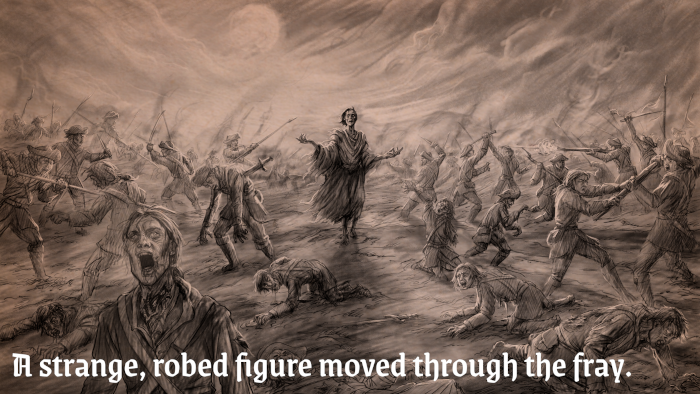
One fascinating detail is that Aleks and his three lifelong friends remember the same events differently. Why did you choose to explore unreliable memories, and can players influence how these characters interpret their shared past?
——–
We are approaching The Lich Wars as a proper literary work of gothic fiction, rather than just a game with a gothic atmosphere. There are a number of themes which classic gothic literature explores, including the concept of the unreliable narrator (Edgar Allan Poe and H.P. Lovecraft would be good examples of this). This is one of the themes in their work which I find most powerful: it puts you in the shoes of someone under so much psychological stress that they can’t even believe their own memories.
The reason we chose to push strongly in a literary direction is that we saw how strongly our writing in The Necromancer’s Tale resonated with players, and it was the story and narrative that won most awards. We saw that there is a genuine market for well written game narratives which explore these sorts of ideas.
Although the overall story arcs have been mapped out for the game, we are still only in the first war in terms of completed writing. It is this war which produced the horrific events which characters remember differently. We haven’t yet written the later scenes where events are discussed. The intention is that the player will indeed be able to debate and discuss what “really” happened.
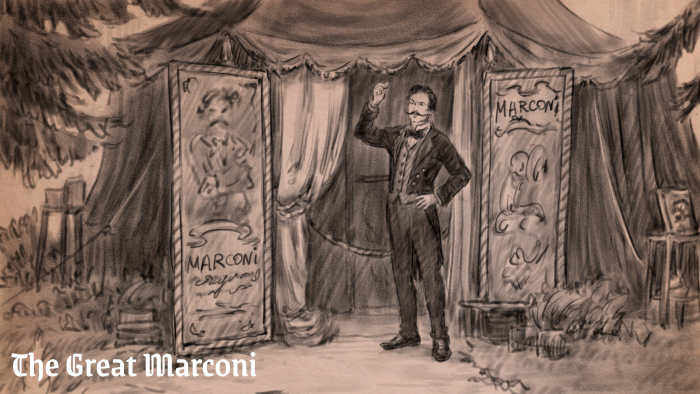
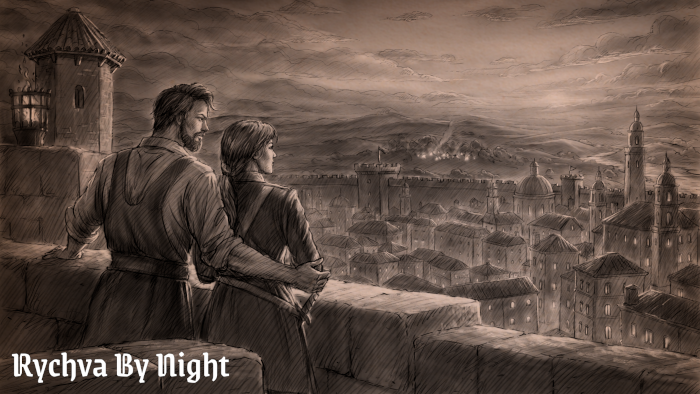
The game presents its story through a 3D book, illustrated characters, and hand-painted tabletop miniatures. How did you arrive at this unusual visual approach, and were there any interesting ideas or experiments that didn’t survive development?
——–
The core idea – of the illustrated 3D book – carried through from The Necromancer’s Tale. In that game, there is a brief (~30 minute) prologue presented in that format. We have had a lot of players say how much they enjoyed the format and many saying they’d love a full game done that way.
The table is a separate idea, of course. It’s a low-key replacement for an open world: an opportunity to show key scenes in a more impressive way than would be possible in a pencil sketch. We’re attempting to deliver a visual novel with top-end multimedia quality as well as top-end writing.
The book and table also suggest the idea that the protagonist is somehow in a later time, reflecting on events of the past – the book and table are representations of events, rather than actually being the events. This ties in with the idea of unreliable narratives and self-justifying constructions which justify the things we do and ease the things that we can’t quite accept from our past.
With an estimated 300,000 words of branching narrative and lessons learned from The Necromancer’s Tale, what’s one thing you’ve changed about your development process that you’d recommend to other indie developers tackling ambitious story-driven games?
——–
In fact, we are following the exact same process! It worked really well the last time, although I do acknowledge it was a process that we evolved into through necessity rather than by design.
Essentially, the way it works is that we have a well-developed high-level story design – with all the plots and character arcs specified – and with individual scenarios scoped loosely as single paragraphs. The entire document is 55+ pages. We work with a team of writers (currently 5, including me) who ‘claim’ individual scenarios to write whenever they are ready – this allows them to specialise and pick the scenes that appeal to them most, and it also means nobody is put under too much pressure to deliver to a deadline. We meet every two weeks and discuss what we’re working on and what comes next, so there’s a lot of cross-pollination going on.
The writers deliver their work to me (the editor) as regular Google Docs, and I enter them into our branching narrative tool (Articy: Draft). Although this is somewhat onerous on me, it forces me to read very carefully as each piece is entered, so it leads naturally to a well-edited, high-coherence narrative. Articy is an excellent node-based visual tool which means I can easily spot errors and additional opportunities to add bits to the scenes as I put them into the game.
The interview was also published with editorial opinion here (DevPlay Media).